
Give sustainability back its human dimension
Social and environmental aspects need to move forward together. Only then will the transition leave no one behind, and only then will it truly accelerate.
by Mario Calderini
Today, sustainability is in the dock. It took just one year, perhaps less, for a theme perceived as a foundation of civil life and of our future to become the target of a wave of mistrust, skepticism and political backlash. We live in an era in which scientific evidence is no longer in question: the IPCC (Intergovernmental Panel on Climate Change) has shown how the trajectory we are following is leading us beyond the 1.5 degree increase compared to the pre-industrial average temperature, a threshold that the international scientific community had indicated as an inviolable limit to avoid catastrophic scenarios, and the World Economic Forum (WEF) has estimated that, between now and 2050, if we are not able to protect biodiversity, we will put 50% of global GDP at risk. These data make clear the extent of the risk we are running. And yet, faced with a danger so concrete and close, society is not reacting as we would expect. We are not witnessing, in fact, a determined collective action but rather a form of backlash, an immune reaction that comes from productive actors, workers, ordinary people. This forces us to ask ourselves: where did we go wrong in the narrative and management of the ecological transition?
Europe itself, which had built much of its political and economic identity on social cohesion and respect for planetary boundaries, is experiencing a major identity crisis, and the cultural reversal has been so radical that, for the first time, people have gone back to thinking that sustainability and competitiveness are enemies. It is a serious symbolic regression, because reducing everything to a frontal opposition between growth and sustainability is a dangerous cultural impoverishment
In previous years, we had painstakingly achieved the awareness that profit and environmental or social impact could coexist, that value creation was not incompatible with caring for the world. Now, however, the temptation has crept in to attribute Europe’s economic fragility to the “constraints and shackles” of sustainability. Political and social consensus around sustainability has cracked because there is a growing perception that the costs of the ecological transition are being passed precisely onto them – the weakest, the least educated, those living on the margins of growth – and it is precisely here that the most painful rupture has occurred. We have forgotten that the sustainable transition is also, and above all, a social transition. The two dimensions, social and environmental, should move forward together, like interlocking gears: if one gets stuck, the other inevitably slows down as well. The data actually show us this dramatic impasse, which reveals a major error of perspective by politics and economics that have built the ecological transition as a technical process, but have forgotten it as a human project.
The European Green Deal, and even our NRRP, have promoted words such as digital, green, innovation, but the word inclusion has rarely appeared. And it is there that we lost consensus, because sustainability cannot be a race for the few, it must be a collective journey. Let us take a concrete example: the city of Barcelona. Its urban regeneration policies have reduced CO₂ emissions by 25%, an extraordinary result. But that ecological success has led to increased housing prices, pushing the poorest segments out of regenerated neighborhoods. A new form of environmental injustice has thus been created: sustainability has become a privilege, not a right.
This imbalance stems in part from the role taken on by the financial world, where it was above all the environmental component that attracted the attention of investors, because it is more easily translatable into profit. ESG instruments, created to measure the impact of companies, have developed above all on the “E” of environment, since it is easier to quantify and turn into returns: reducing emissions, installing photovoltaic systems or investing in energy efficiency generates tangible returns, immediately readable by the markets. Much more difficult, instead, is to translate into economic value social cohesion, education, gender equality or the quality of labor relations. The metrics of the “S” remain elusive, fragmented, often qualitative. And what is not measured tends, inevitably, to count less. Thus, while capital has oriented itself towards the green transition, the social dimension of sustainability has remained in the background.
If we really want to combine environmental and social sustainability, the only way is innovation: finding solutions that do not force us to choose between objectives that seem to be in conflict. Economist Richard Nelson, shortly after the moon landing, wondered whether, after such an enormous technical achievement, we would also be able to solve the problems of the “ghetto”, using this word as a metaphor for social inequalities. His provocation remains entirely current: we have demonstrated that we can reach incredible technological milestones, but we struggle to translate innovation into social justice. The European vision that saw innovation driven also by civil or environmental public spending risks being lost today, but still represents the most promising path, because teaching and practicing innovation in a world of finite resources and abundant constraints is the real challenge of our time.
Perhaps Kate Raworth was right with her Doughnut Economics: sustainable development must stay in a space of balance between the ecological ceiling and the social floor. If we violate the planet’s limits, the house collapses.
But if we pierce the social floor, there is no one left to live in it. It is necessary to rebuild trust, to give meaning back to words, to restore to sustainability its human dimension, made of listening, fairness, sharing. But this reconstruction requires two ingredients which, every time in history, have allowed humanity to overcome its contradictions: innovation and law. Innovation as a creative drive, as the ability to find solutions that hold together what seems irreconcilable; law as an instrument of civilization, which turns moral achievements into collective practices.
Nature, the third sector, the countries of the Global South have much to teach us, such as knowing how to use few resources efficiently, creatively, with resilience. If we are able to integrate this lesson with the power of the technologies available, then we can truly build a transformative sustainability, capable not only of reducing emissions but of generating a fairer society. Only in this way will the transition not leave anyone behind, and only in this way will it truly be able to accelerate. For this reason, the ecological and social transition is not a renunciation, but a metamorphosis. It is the opportunity to rewrite the pact between economy and humanity, between technology and justice, between well-being and responsibility. And perhaps in it we can find the promise of a new beginning: one in which innovation will no longer be a blind force, but a form of care; and sustainability not an obstacle, but the common home in which we can begin to live together again1.
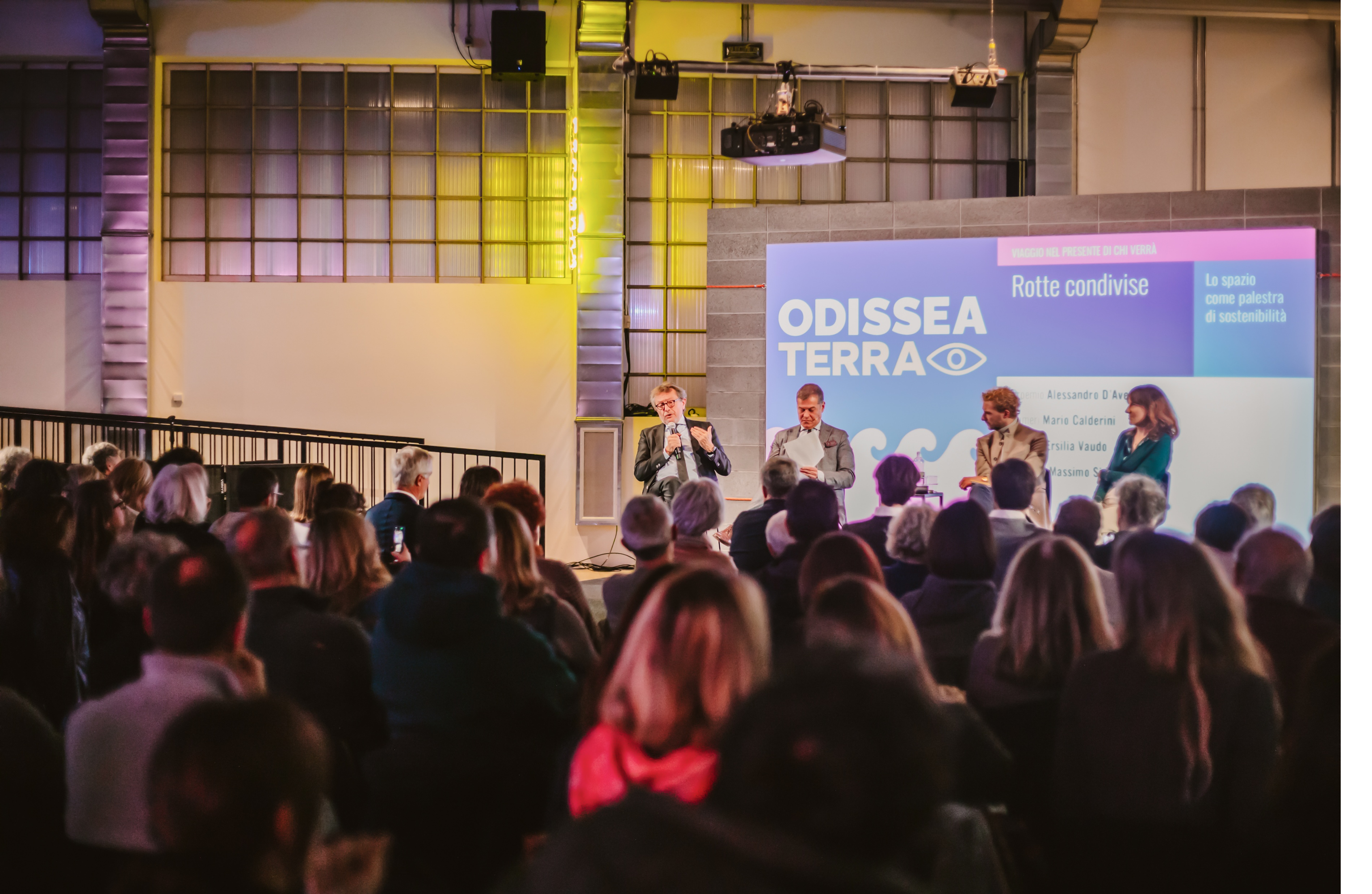
1The present text is a summary, signed by Mario Calderini, of the talks he delivered as part of the Odissea Terra project, the programme of in-person events and ESG dissemination across digital channels promoted by Fondazione Pesenti, Fondazione Corriere della Sera and Italmobiliare.
Mario Calderini
Mario Calderini is a full professor at the Politecnico di Milano, where he teaches Management for Sustainability and Impact at the School of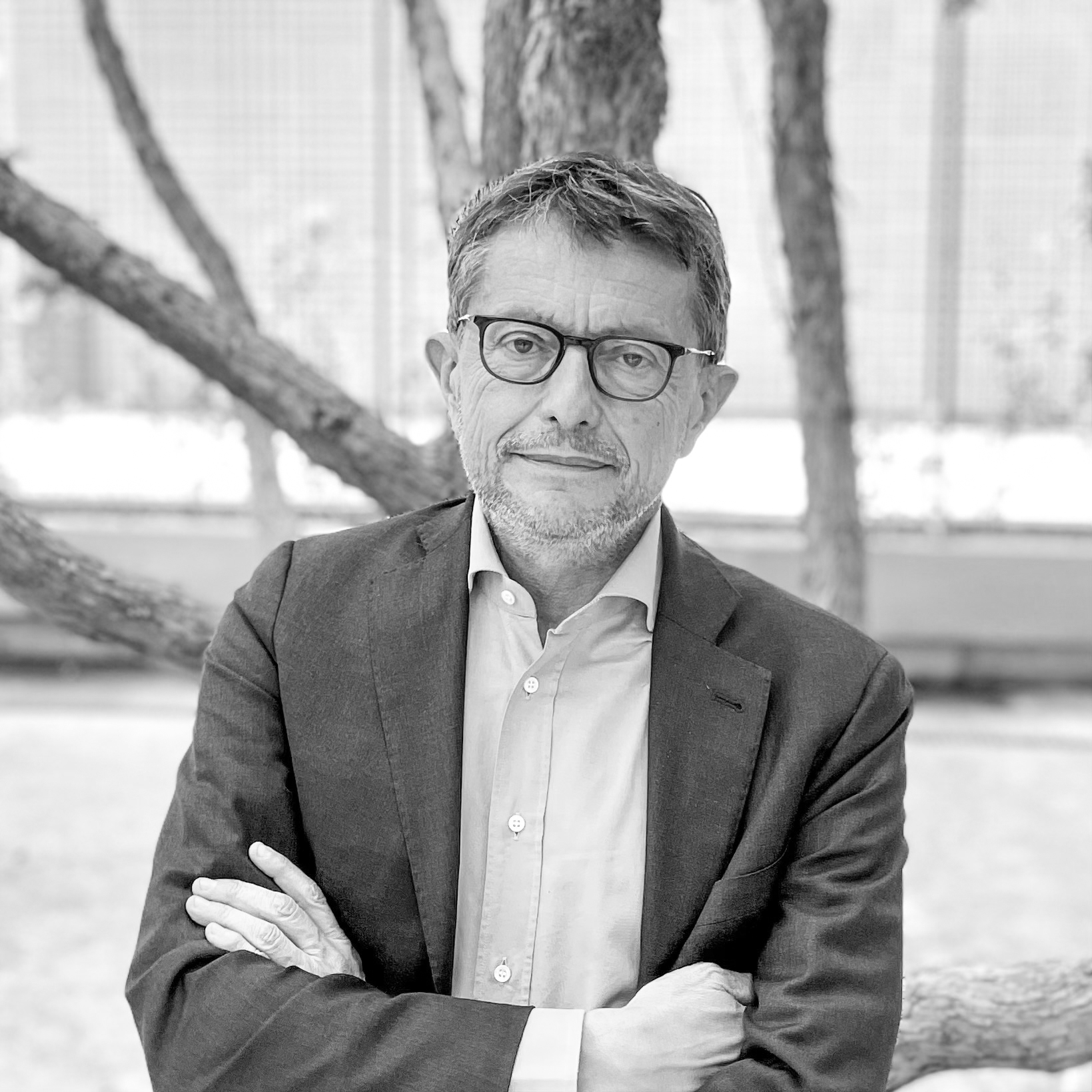 Management. He is the director of TIRESIA, the Politecnico's research center on social-impact innovation and finance. He contributed to the Third Sector Reform by participating in the Government’s advisory groups, and he was a member of the Social Impact Investment Task Force. He is the president of Social Fare, an impact start-up incubator, chairs the Research and Innovation Forum of the Lombardy Region, and serves on the advisory boards of UniCredit Italia and Nesta Italia.