
THE CULTURE OF PEACE
Nobel Peace Prize Laureates and experts in dialogue for The Culture of Peace
 Making culture a concrete instrument of civil and social growth, especially for the younger generations: this is the idea that inspired the project of Fondazione Pesenti Ets, which for over twenty years has been engaged in cultural, social and educational initiatives , and gres art 671. Alongside the exhibition ‘de bello. notes on war and peace,’ the project ‘The culture of peace’ was thus developed, a series of five meetings which, through the involvement of four Nobel Peace Prize laureates, experts and international leaders, transformed the cultural hub of gres into a stage for dialogue and reflection on universal themes such as global peace, reconciliation and human rights.
The journey began with a trip through history guided by the engaging words of Alessandro Barbero, who showed how today’s conflicts arise from ancient dynamics. For the historian Barbero, history does not offer universal laws, “but it allows us to recognize the mechanisms that always come back, those that turn fear into rearmament, rearmament into paranoia and paranoia into war.” It is an invitation to use memory not to predict the future, but to learn how to avoid its mistakes.
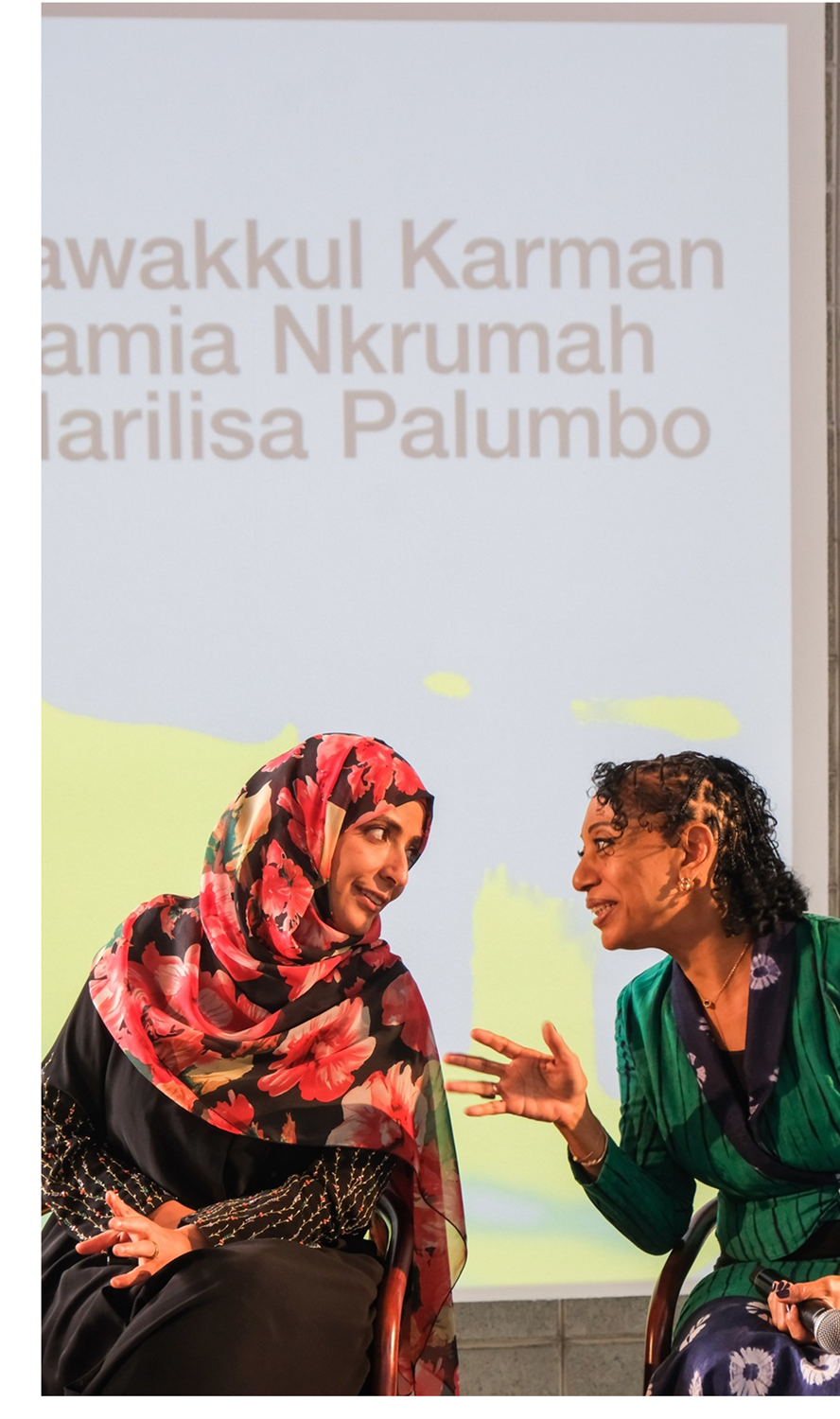
From historical analysis we move to the testimony of those who have personally committed themselves for peace, driven by the power of civil disobedience. Tawakkol Karman, Yemeni, Nobel Peace Prize laureate in 2011, recalled how her father had taught her “always to take the initiative, never to wait for someone to authorize us to defend our own dignity.” For her, peace is not an outcome but an act of courage: “peace is not the absence of conflict. It is the moment when you decide no longer to accept injustice, to speak when everyone else is silent.” On stage with her was Samia Nkrumah – daughter of Kwame Nkrumah, father of Ghanaian independence – who passionately illustrated a perspective of African unity founded on mutual responsibility. Nkrumah recounted how her father used to repeat that “freedom is not won without sacrifice, and it is not preserved without a shared vision” and she explained how peace processes must always start from what is possible: “in negotiations we begin from what we agree on, even if it is very little. From there we build the common ground.” A suggestion of great relevance, a reminder of an idea of peace as a slow, demanding and collective construction.
During ‘The Culture of Peace’ with Nadia Murad, Nobel Peace Prize laureate in 2018, the dialogue took on the terrified face of the victims of genocide. Murad stressed that “peace does not begin when the weapons fall silent, but when people can return home, rebuild a village, regain a name, a life, a safe road.” Only in this way does peace cease to be an abstract ideal and become a practice that restores dignity, a daily value.
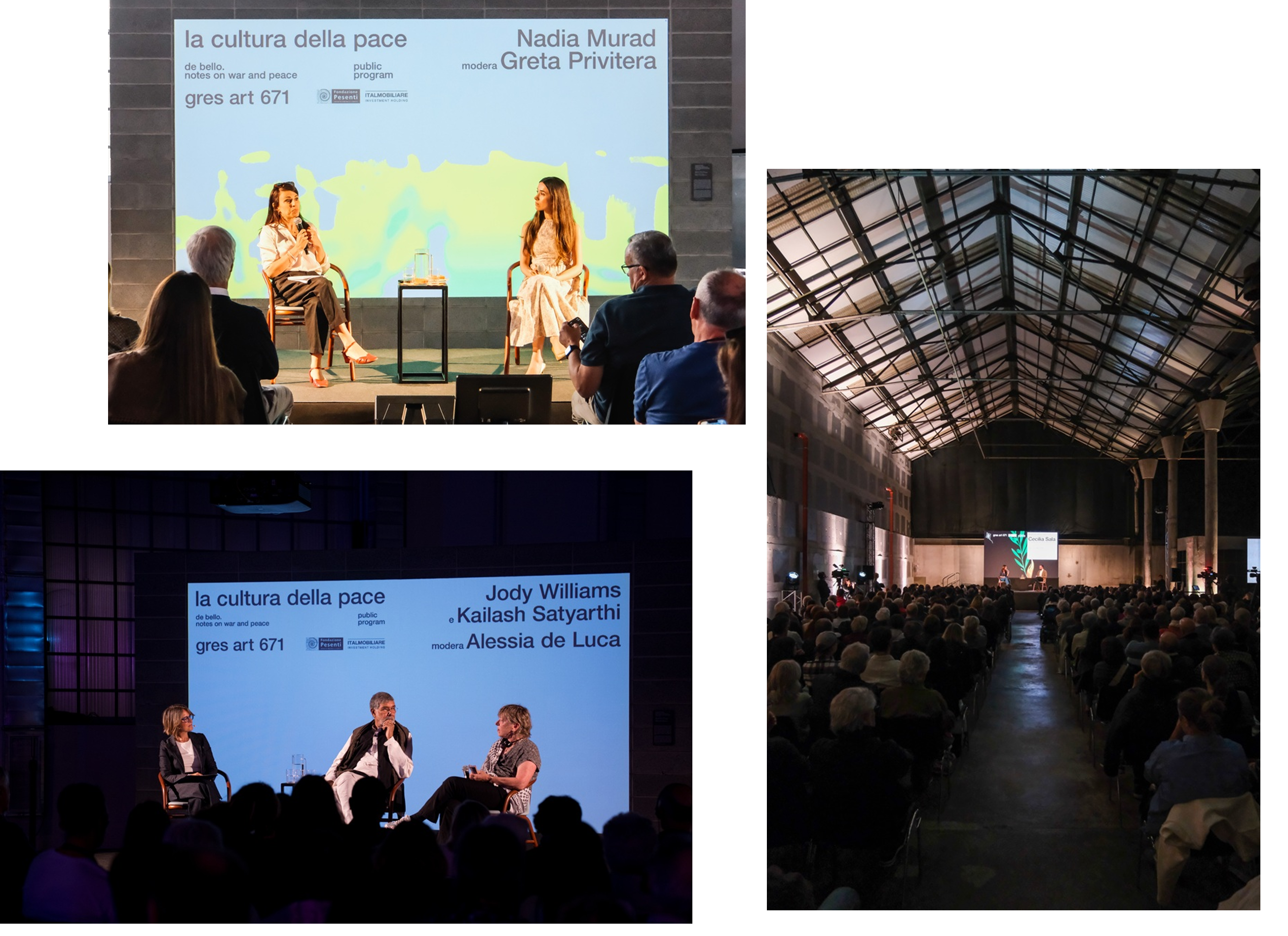
Kailash Satyarthi brought out the voice of global activism against child labour. “Without compassion there is no transformation. The world is becoming more aggressive, louder, more competitive: that is why we need a collective moral voice, a leadership capable of protecting the most vulnerable,” underlined the 2014 Nobel Peace Prize laureate. In dialogue with him was Jody Williams, Nobel Peace Prize laureate in 1997, who showed how civil action can change treaties and governments, taking as an example the international campaign that led to the banning of anti-personnel mines.
The journey ends with Cecilia Sala, journalist and writer, who invited us to reflect on the role of information, recounting war starting from the profound transformation of the societies involved in the conflict and from the way in which political language has erased the word peace. And this even though, “for the majority of Israelis continuing the war in Gaza is wrong” and the leaderships of “Hamas and Fatah have long avoided facing elections.” Her account restores the essence of peace not as an abstract concept, but as a daily possibility that is denied.
In this extraordinary interweaving of memories, analyses and actions, ‘The Culture of Peace’ has connected and brought together distant experiences, voices that Fondazione Pesenti Ets, through gres art 671, not only hosts but embraces as a cultural and educational path and as a civic commitment. Because, as Jody Williams taught us, “when you see an injustice and you say nothing, you become part of the problem. If you keep silent you are complicit.” A harsh sentence that echoed through the project as a warning and a responsibility, and that takes us back to the origin of a series of meetings born precisely from the desire to speak out, to take sides in favor of the justice that leads to peace, and to transform culture into a shared responsibility.